Needlepoint for Beginners: Supplies, Stitches, Easy Projects
Needlepoint is having a moment, and if you’ve been thinking about trying it, this needlepoint for beginners guide covers the supplies you’ll need, the basic stitches to learn, and some easy project ideas to help you get started.
I do a lot of needlepoint and one of the things that I like is that you don’t need a lot of equipment, and once you learn a few basic stitches, you’ll be ready to start creating.
What Is Needlepoint
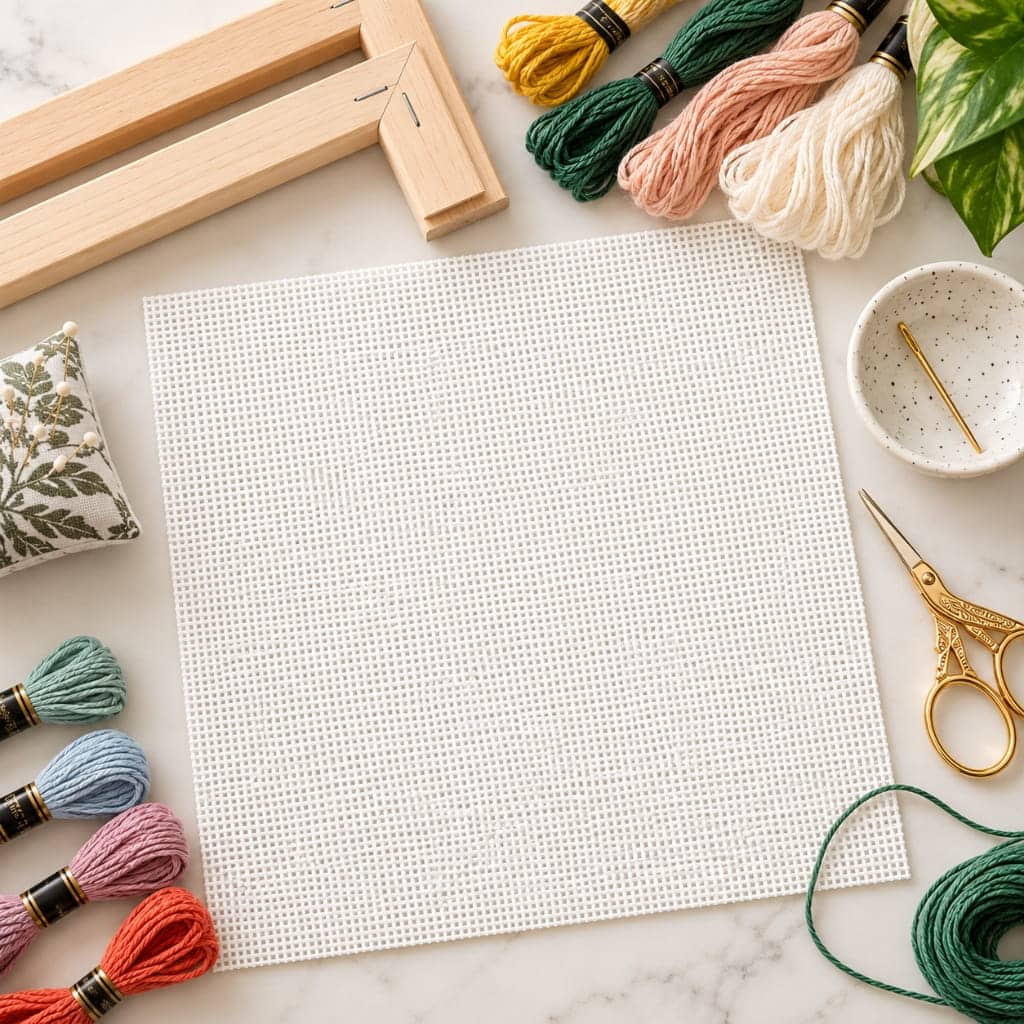
Needlepoint is a type of embroidery. Unlike traditional hand embroidery, where you stitch directly onto fabric, needlepoint uses a canvas with evenly spaced holes where you stitch.
Most needlepoint projects start with either a painted canvas with the design already on it or a blank canvas you stitch from a pattern. You work your stitches across the canvas, gradually filling in the design with color and texture.
How Is Needlepoint Different From Embroidery
Although needlepoint is technically a form of embroidery, there are a few important differences.
With traditional hand embroidery, you can use a variety of fabrics and place your stitches almost anywhere to create a design. Needlepoint, on the other hand, uses a grid-like canvas, and the stitches follow that grid.
Needlepoint also typically covers most or all of the canvas with stitching, while hand embroidery often leaves much of the fabric showing.
Both crafts are fun and creative, but needlepoint has a more structured approach that can make it easier for beginners to know exactly where their stitches should go.
Beginner Tip: Needlepoint can be more expensive than embroidery, especially if you’re purchasing hand-painted canvases. If you’re on a budget, look for counted needlepoint kits or patterns that use blank canvas. You can also check out our Embroidery for Beginners article to learn about another inexpensive way to get started with needlework.
What Supplies Do You Need for Needlepoint
One of the nice things about needlepoint is that you don’t need a lot of supplies to get started. Once you have a canvas, needle, and thread, you’re ready to start stitching.
Here are the basic supplies you’ll need for your first needlepoint project.
- Needlepoint canvas: Needlepoint is worked on an open-weave canvas with evenly spaced holes. For beginners, I recommend starting with 13-mesh canvas, which has larger holes and is easier to see and stitch than finer canvases.
- Needlepoint yarn or thread: Wool, cotton, and silk are all popular choices. The type of thread you use will depend on your canvas and the look you want to achieve.
- Tapestry needles: These needles have blunt tips and large eyes that make them easy to thread. Choose a needle size that works with your canvas mesh.
- Embroidery scissors: A small pair of sharp scissors is useful for cutting threads as you work.
- Needlepoint pattern or painted canvas: You can follow a counted pattern on blank canvas or purchase a painted canvas with the design already marked. Painted canvases are especially convenient for beginners because you can see exactly where to stitch.
- Needlepoint stretcher bars or frame (optional): These help keep your canvas taut while stitching. Some people prefer using a frame, while others enjoy stitching with the canvas in their hands.
Should You Start With a Needlepoint Kit
If you’re completely new to needlepoint, a beginner kit can be a great option. Most kits include a canvas, the threads you’ll need, a needle, and instructions.
I recommend choosing a small design with just a few colors rather than starting with a large or complicated canvas. You’ll be able to concentrate on learning the stitches without feeling overwhelmed by the project.
Basic Needlepoint Stitches for Beginners
One of the things that I love about needlepoint is that you can create an entire project using just one stitch. You don’t need to learn dozens of stitches to get started, although experimenting with different stitches can be a lot of fun as you become more experienced.
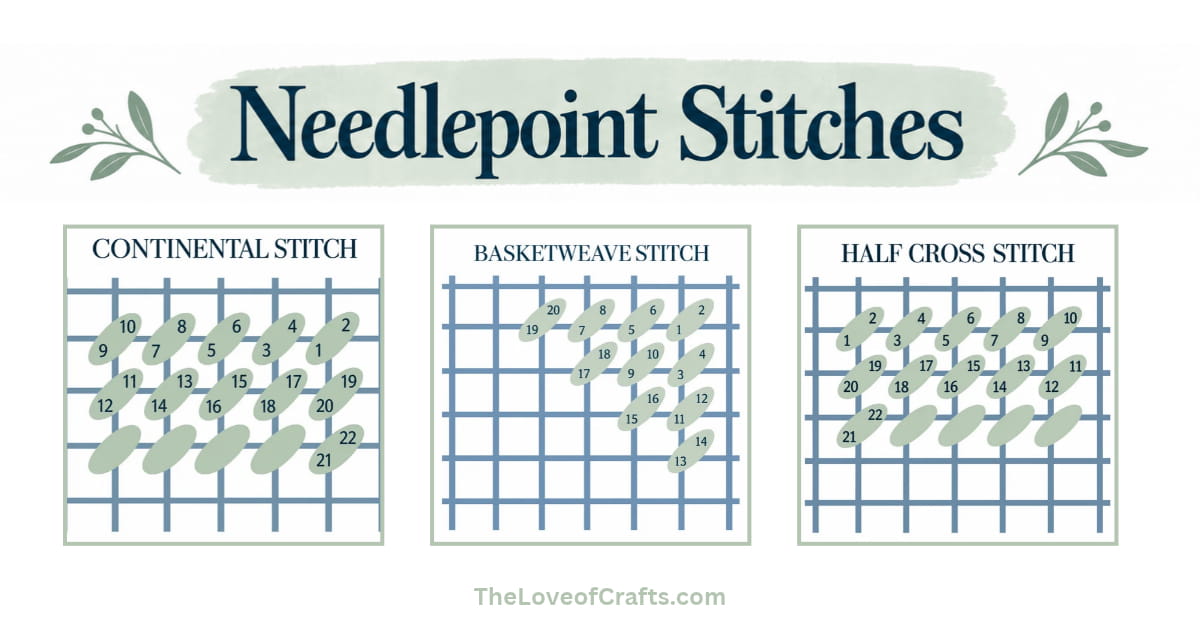
There are three basic tent stitches that I recommend learning when you’re first starting out.
Continental Stitch
The continental stitch is one of the most commonly used needlepoint stitches. It creates a small diagonal stitch across one intersection of the canvas.
It’s a great stitch for beginners because it’s easy to learn and works well for outlining designs, stitching small areas, and filling in details.
Basketweave Stitch
Basketweave is another type of tent stitch, but instead of working across the canvas in horizontal rows, you stitch diagonally, following the weave of the canvas.
This is one of my favorite stitches for covering larger areas, especially backgrounds. It provides good coverage and helps reduce canvas distortion.
Half Cross Stitch
The half cross stitch looks similar to the continental stitch from the front, but the thread travels differently across the back of the canvas.
It uses less thread than continental or basketweave, but it also provides less coverage. Because of this, it’s generally better suited for small areas rather than large backgrounds.
Beginner Tip: Start with a basic continental stitch, then try basketweave when you’re ready to tackle larger areas. Once you’re comfortable with the basics, you can start experimenting with decorative needlepoint stitches to add texture and interest to your designs.
Needlepoint for Beginners: Easy Projects
Now that you know the basic stitches, it’s time to start your first project. I recommend starting small, with fewer colors and no intricate details.
Here are a few beginner-friendly projects that are fun to stitch and give you something useful or decorative when you’re finished.
- Needlepoint Ornaments: Small designs that are especially popular for holidays.
- Needlepoint Coasters: Practical projects that make nice gifts.
- Needlepoint Bookmarks: Narrow designs that are great for practicing stitches.
- Needlepoint Eyeglass Cases: A useful project that requires some finishing.
- Needlepoint Keychains: Small designs that can be turned into everyday accessories.
- Small Framed Needlepoint Designs: An easy way to display your finished stitching.
Beginner Tip: Before buying your first canvas, think about how you’ll use the finished piece. Some projects, such as ornaments and eyeglass cases, require additional finishing that can be more complicated or expensive than the stitching itself. A small framed design is often one of the simplest options for a first project.
Give Needlepoint a Try
Now that you know the basics of needlepoint, I hope that you’ll give it a try. It really is a fun and relaxing craft. And because most needlepoint projects start with a painted canvas, it’s almost like painting by numbers but with a needle and thread. Just follow the colors on the canvas and you’ll end up with a beautifully stitched project that you can hang in your home, or give as a gift. It’s so rewarding to finish a needlepoint project and share it with others.
Follow me on Pinterest for fun and easy craft projects and ideas. Which one of these needlepoint for beginners ideas is your favorite? Please leave a comment and let me know.

- Knitting vs Crochet: Which Is Easier for Beginners? - October 23, 2026
- How to Start Knitting for Beginners: Easy Step by Step Guide - October 21, 2026
- 10 Easy Needle Felting Projects for Beginners - October 18, 2026